JASON WATKINS
HOF Media
NORMAN, Oklahoma — Owen Heinecke won the biggest fight of his football career Thursday, when Cleveland County Judge Thad Balkman granted the Oklahoma linebacker’s request for a preliminary injunction and cleared the way for the former walk-on and likely team captain to pursue a fourth season with the Sooners.
Balkman ruled from the bench after a hearing that stretched through the morning and into the afternoon, concluding that the evidence clearly showed Heinecke is a third-party beneficiary of the NCAA’s bylaws, that COVID affected his recruitment, and that the NCAA failed to consider the totality of his case.
The ruling handed Heinecke and Oklahoma an immediate victory in one of the more unusual eligibility fights of the college football offseason. It also validated the central point Heinecke’s attorneys hammered throughout the day: this was not a request for a bonus year, but for the fourth football season they argued he should have had all along.
“We’re not asking for a stretch here,” Heinecke attorney Mary Quinn Cooper told the court in closing. “We’re not asking for a fifth, sixth or seventh year. We’re asking for a fourth year of football.”
That line became the heartbeat of Heinecke’s case.
Heinecke sued the NCAA after the organization denied an eligibility extension that would have allowed him to return to Oklahoma in 2026. The dispute centered on his 2021-22 freshman year at Ohio State, where he briefly played lacrosse before later transferring to OU and walking onto the football team.
The NCAA counted that year against Heinecke’s five-year eligibility clock.
Heinecke’s side argued that result ignored reality.
They contended he never had a meaningful chance to play football that year because COVID-era recruiting disruptions limited in-person exposure, wiped out camp opportunities, and changed the landscape for high school recruits just as he was trying to find a football path. They also argued Ohio State did not hold football walk-on tryouts until spring 2022, further undercutting his ability to compete for a football role, and said injuries compounded the problem.
Heinecke testified about trying to make himself available in a recruiting environment that had largely shut down face-to-face evaluation.
He also described how the extra COVID years given to older college players shrank opportunities for recruits in his class. With rosters older and more crowded, he said, schools increasingly leaned toward known college players rather than unproven high school prospects.
That environment, his attorneys argued, was not something he created or controlled.
The NCAA, however, framed the case differently.
Its counsel argued that Heinecke chose lacrosse, not football, at Ohio State, and that the key circumstances were therefore within his control. The NCAA acknowledged that Division II or service-academy football is not the same as Division I SEC football, but said those differences do not change the rule.
“The NCAA says Heinecke chose to play lacrosse, not football,” the organization argued in closing. “It was in his control.”
The NCAA also insisted the record did not show anything improper in how it handled the waiver
“There isn’t enough proof that the NCAA has done anything but apply its bylaws,” counsel said.
But Heinecke’s lawyers spent much of the day trying to show the opposite — that the NCAA’s process was inconsistent, rigid in his case, and far more flexible in others.
Cooper delivered the sharpest blows there.
She told the judge the NCAA claimed Heinecke failed to submit medical records tied to the 2021-22 year, but said 171 pages of medical records were in fact included in his petition and waiver materials. She also repeatedly argued the NCAA failed to view Heinecke’s circumstances as a whole.
“Was anyone considering the totality of the circumstances for Owen Heinecke? Absolutely not,” Cooper said.
That phrase became one of the hearing’s defining themes. In the end, Balkman’s ruling suggested he agreed.
Cooper also turned the hearing toward a newly surfaced NCAA internal decision from October 2025, involving a women’s athlete whose case she said was “eerily similar” to Heinecke’s. According to Heinecke’s legal team, the NCAA granted that athlete relief under a flexible totality-of-the-circumstances standard, but never uploaded the decision into the internal database member schools use to research precedent.
That meant Oklahoma could not cite it when it pursued Heinecke’s waiver.
Cooper openly mocked the NCAA’s explanation for the omission, at one point saying it had to be a “joke.”
She also challenged the NCAA’s description of the comparable ruling, saying the organization claimed the committee did not approve the female athlete’s extra season even though the player had completed that additional season just months ago.
In rebuttal, Cooper said the NCAA has shown “time and again” that it can be flexible, and questioned why it had not shown that same flexibility to Heinecke.
That argument appeared to resonate with the judge, who specifically said the NCAA failed to consider the totality of Heinecke’s case.
Cooper also argued irreparable harm was “absolutely undisputed,” saying denying Heinecke another season would cause lasting damage to both his college career and his NFL future. On that point, Oklahoma head coach Brent Venables and general manager Jim Nagy gave testimony that gave the hearing a football spine.
Venables was asked at length about the developmental difference between SEC football and other college paths such as Division II or military-academy football.
Respectfully but firmly, Venables said those environments are “dramatically different.”
He emphasized that development is driven first by practice — what a player goes against every day, the level of coaching, the depth of instruction, the resources available, and the speed and violence of the game. In his view, there is no true comparison between the day-to-day demands of SEC football and the alternatives the NCAA suggested had once been available to Heinecke.
Venables also described Heinecke’s evolution at Oklahoma.
When Heinecke first arrived, Venables said, he was dealing with a knee issue and was still learning how to play linebacker in a college system. He had athletic ability, but needed guidance, refinement, and time.
Over the next few years, Venables said, Heinecke earned trust, carved out a role and eventually became a starter over the final stretch of last season. More importantly, Venables testified that Heinecke was only beginning to become the player he could be.
“He’s just now scratching the surface,” Venables said.
He described the jump players often make from one season to the next late in their careers and said that, in his experience, the difference between a player’s third, fourth and fifth years can be more meaningful than everything that comes before.
“The game was just starting to slow down” for Heinecke, Venables said.
Another season, he testified, could bring a major leap in confidence, physicality, leadership and instincts. Without it, Venables suggested, the loss would be impossible to truly measure.
“It’s immeasurable what you miss out on,” he said.
Venables also made clear he believed the impact would extend to the professional level.
“Without question,” Venables said when asked whether another college season would affect Heinecke’s NFL process.
He described the NFL as “the most unforgiving league on the planet” and said players who enter it before they are fully ready can quickly get left behind. In his experience, very few players leave college after only three years and make an immediate impact. More often, he said, another year of seasoning, leadership and development makes the difference.
Nagy took that point and sharpened it.
A longtime NFL evaluator, Nagy testified that he had been telling scouts since August to start watching Heinecke and said another year would be a major boost.
“It’d be huge for him,” Nagy said.
“To have that bigger runway, would be huge.”
“The NFL tries to avoid one-year wonders. Owen’s a half-year wonder.”
That line may have been the day’s clearest summary of the draft case for Heinecke. Nagy’s point was that scouts have seen enough to be intrigued, but not yet enough to erase uncertainty.
Nagy testified that Heinecke projects right now as a fifth- or sixth-round NFL draft pick. But he said another season could dramatically improve that stock.
“He has a lot to gain coming back,” Nagy said.
Nagy said Heinecke is on the cusp of a significant jump and even suggested that, with another full season, he could play his way into contention for the Butkus Award. He also said he would be shocked if Heinecke were not one of Oklahoma’s captains next season, noting the respect he has earned inside the program.
The NCAA tried to counter that by arguing Heinecke’s return would necessarily affect someone else.
“Coach Venables says they play 6 linebackers,” NCAA counsel said. “Heinecke would be one of those. What about No. 7? I bet he’d like to be No. 6.”
But Nagy pushed back on the idea that Heinecke’s return would come at a teammate’s expense.
He said Oklahoma would carry a 104-player roster regardless, that the locker room would welcome Heinecke back “with open arms,” and that there had been no real indication of internal concern from the players supposedly affected.
“I have not heard from an agent from those other linebackers,” Nagy testified. “If it were an issue, I would have heard from them.”
That testimony helped undercut one of the NCAA’s equity arguments and gave Oklahoma a practical football answer to the notion that restoring Heinecke’s eligibility would unfairly harm others.
Heinecke’s attorneys also made a pointed football comparison with Nagy: had Heinecke played three football games instead of three lacrosse games in that first year, he likely would have been eligible for a redshirt. That line of questioning was meant to show how differently the NCAA treated the same player based on the sport attached to those appearances.
By the end of the day, Balkman sided with Heinecke.
His ruling means Heinecke can move forward as eligible while the broader lawsuit continues. It is a meaningful immediate victory, not just procedurally but competitively.
For Oklahoma, the decision potentially restores a veteran linebacker, emotional leader and likely captain to a defense with major expectations.
For Heinecke, it is the most important win yet in a case built around a simple argument that ultimately convinced the court: he was not asking for something extraordinary.
He was asking for a fourth year of football.
The SEC transition has been harsher on Brent Venables and the Oklahoma Sooners than anticipated, with a tough 1-4 start sparking fan concerns over Venables’ leadership.
Despite glimpses of offensive progress in their latest 26-14 loss at Ole Miss, Oklahoma’s 4-4 record has fueled doubts about Venables’ ability to steer the program through the SEC’s relentless competition. While injuries to key offensive players have created challenges, Venables’ hesitance to address coaching issues and poor communication within the offensive staff have only deepened the Sooners' struggles.
The failure of the offensive staff to communicate effectively and Venables’ hesitance to manage his coaching staff proactively have compounded the difficulties presented by mounting injuries.
Hesitancy on Display: The 4th-Down Decision
Venables' hesitation was encapsulated on Saturday, just six days after finally relieving Littrell of his duties as offensive coordinator: the 4th-and-4 timeout against Ole Miss late in the third quarter. Trailing by two scores, Oklahoma needed a jolt to stay in the game.
The situation was critical, but hardly complex. Coaches make these calls instinctively, often without a second thought. Instead, Venables used a timeout — only to ultimately bring out the punt team, a decision that deflated the offense and left fans scratching their heads.
If the choice was to punt, Venables could’ve delayed the game for a mere five yards instead of burning a precious timeout. If he intended to go for it, why not get his new play caller’s best play for the situation and make the call confidently?
Even if the Sooners fail to pick up the four yards, it would have signaled a willingness to take a chance — or give one — to an offense that has been less-than-inspiring all season.
In that one instance, Venables’ hesitation was as costly as a missed play. With the momentum squarely in favor of Lane Kiffin’s Rebels, burning that timeout only to punt sent the wrong signal to a young group on offense that is in serious need of someone who believes in them. Instead, he proved he didn’t trust them to get a measly four yards and extend a drive to get back into the game.
OU’s Identity Crisis on Offense
What we’re witnessing with OU’s offense is not merely a slump — it’s an identity crisis. Oklahoma fans are accustomed to high-powered, fast-paced offenses that can score almost at will. Littrell’s offense was anything but explosive for seven weeks, and Joe Jon Finley had a lackluster, scoreless latter half of Week 8, too.
To say the Sooners struggled to establish consistency would be an overwhelming understatement.
OU has struggled with untimely penalties and turnovers and suffered through a complete lack of innovation and creativity. The plays feel uninspired, lack direction and are devoid of explosive results.
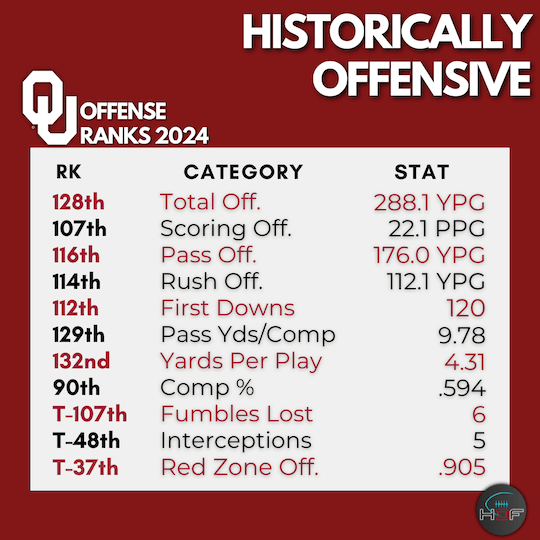
As a unit, this offense is drawing comparisons to the infamous John Blake era, and has the numbers to back the comparison up. ⬇️ ⬇️ ⬇️ ⬇️
There’s no other way to say it but bluntly … OU has no clear identity with its offense on the field.
The offensive woes go beyond play-calling; they’re structural. Reports from inside the Switzer Center suggest that there have been significant communication breakdowns within the offensive staff. Coaches have reportedly been on different pages regarding even the most fundamental elements, like blocking schemes. If those rumors are reaching the public, it’s safe to say Venables has known about these issues for some time.
A head coach — even a defensive-minded one like Venables — cannot allow such dysfunction to persist. These aren’t minor misunderstandings; they’re symptoms of a team struggling to find cohesion. Venables needed to address these issues early, before they became embedded in the team’s culture, but his delay in doing so has turned what might have been small fires into an inferno.
Mailed-In Hire: The Problem with Littrell
When Venables hired Seth Littrell, it felt like a placeholder decision. It wasn’t the bold, visionary hire that programs like Oklahoma should be making. Littrell’s track record showed some promise, but he had yet to prove himself as the kind of offensive mind that could elevate a program to championship contention.
Looking back on the decision to elevate Littrell and Finley, the hire seems more like an afterthought, a half-measure rather than a commitment to offensive excellence.
The results have been glaringly obvious. The offense lacks explosive creativity that OU fans are used to seeing, and that lack of energy has translated into downright unacceptable performances on the field, as evidenced by the Sooners’ historically bad statistical rankings in FBS football.
In just ten months on the job, Littrell and his offensive staff failed to the tune of numbers nobody in their right minds would have predicted following the Sooners’ 2023 season that saw the offense rank in the Top 5 in both Total Offense and Scoring Offense, and alone at the top of the Big 12 Conference in Points, Yards and Yards Per Play.
This despite having two of the most electric quarterbacks from their respective recruiting classes in the fold:
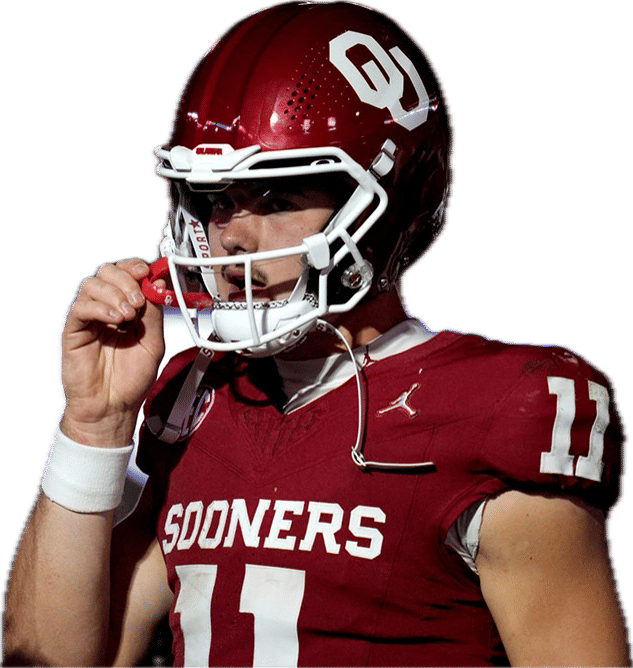
2023 5-star and Elite 11-winning Jackson Arnold of Denton Guyer, the 2023 Gatorade National HS Player of the Year and twice a Class 6A State Finalist in Texas.

And former Allen and Frisco Emerson (Texas) superstar Michael Hawkins, Jr., a Sooner legacy trained by Kyler's father Kevin Murray, and who, as a senior, accounted for 55 touchdowns and just three turnovers, leading Emerson to within a game of playing for a Texas State Championship in Class 5A.
Neither were able to sustain success under Littrell's tutelage, and rumors have swirled this week about none of OU's QBs feeling as though been properly developed by the now-fired Littrell as the QBs coach.
Both started a games after being inserted for the other following ineffective play, and both came into their first appearances under Littrell with confidence and swagger that appeared missing by the time they were pulled from games after committing three turnovers and allowing the Sooners to fall behind teams they likely could have beaten were it not for the turnovers they committed.
In other words, Seth Littrell had to go.
Saturday’s loss leaves Oklahoma at 4-4, staring down a potential losing season -- the second for Venables since he arrived after the abrupt departure of Lincoln Riley to USC.
These are unacceptable at Oklahoma, a school with one of the richest football traditions in the country. What makes it even more alarming is that no longer can OU fans blame the losses on a ineffectice, suoddr defense — OU seems to have mostly turned the corner on that side of the ball — but to say the fan base is frustrated, would again be a massive understatement.
Oklahoma fans don’t want excuses; they want results. And for a head coach like Venables, the time for excuses is running out.
The Next OC Hire: BV’s Defining Moment
After Finally punting the Littrell experiment — once again needing more time than most believe he should have — Venables again finds himself in the market for a new offensive coordinator — for the third time in three seasons.
This time, though, the choice Venables makes will ultimately define his second tenure in Norman, possibly his entire future as a head coach in college football. Mailing it in would be tantamount to a dereliction of duty in the eyes of Sooner Nation.
Venables MUST get this one right. He has to bring in someone with a proven track record of offensive success, someone who can bring energy, innovation, and a clear identity to the offense. Anything less than a home-run hire will only deepen the cracks in Venables’ foundation as head coach.
If Venables fails to find the right offensive coordinator, his job security will slip through those cracks, and his tenure as the Head Ball Coach of the Sooners will die in a whimper. Even if he builds a defense that resembles the ’85 Bears, it won’t matter if OU’s offense can’t score points.
The OU fan base is patient to a degree, but they expect excellence. For Venables, this is a make-or-break moment.
Either he finds the right offensive coordinator and proves he can lead a balanced, championship-caliber team, or he risks being shown the door in a year or less.
The Venables Paradox: Championship Defense, JV Offense
The irony of Venables’ situation is that, in many ways, Oklahoma has become Lincoln Riley’s reverse image. Under Riley, the Sooners fielded prolific offenses but were plagued by a porous defense that could never quite get them over the championship hump.
With Venables, it’s the opposite: the defense has shown promise, but the offense is currently in full-on spiral.
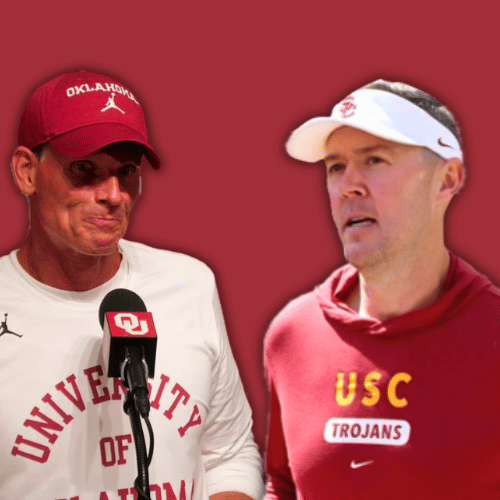
The head coach role, especially at Blue Blood OU, requires more than defensive expertise or recruiting prowess. It demands a complete vision, a well-rounded team, and an unwavering commitment to excellence on both sides of the ball.
For Venables to truly establish himself as a championship-level head coach, he has to be willing to delegate offense to someone who can make people forget he’s a defensive guru and simply call him “Coach.” To reach the heights that Oklahoma fans demand, Venables needs to be remembered not as a defensive mind but as a leader who fields a complete team. That requires taking risks, making tough decisions, and, most importantly, holding his staff to the highest possible standard.
It requires a decisive, confident vision for a championship future. The clock is ticking on Brent Venables’ tenure in Oklahoma, and his window for turning things around is narrowing.
Being the head coach at Oklahoma is an honor, but it’s also a responsibility. Venables needs to rise to that responsibility, or he and Lincoln Riley might both be in the job market this time next year.
________________
Jason Watkins is the Publisher at HOF Media Group and the Host of the HOF College Football Podcast. Reach him at jw@hofmedia.us