Watkins on College Football
Oklahoma must fire Ben Arbuckle today — before Brent Venables makes this his last stand
Written Sunday, Nov. 1, after the South Carolina loss. Oklahoma dismissed Arbuckle on Monday, Nov. 2. Read OU’s announcement. Passing totals reflect OU’s postgame statistics.
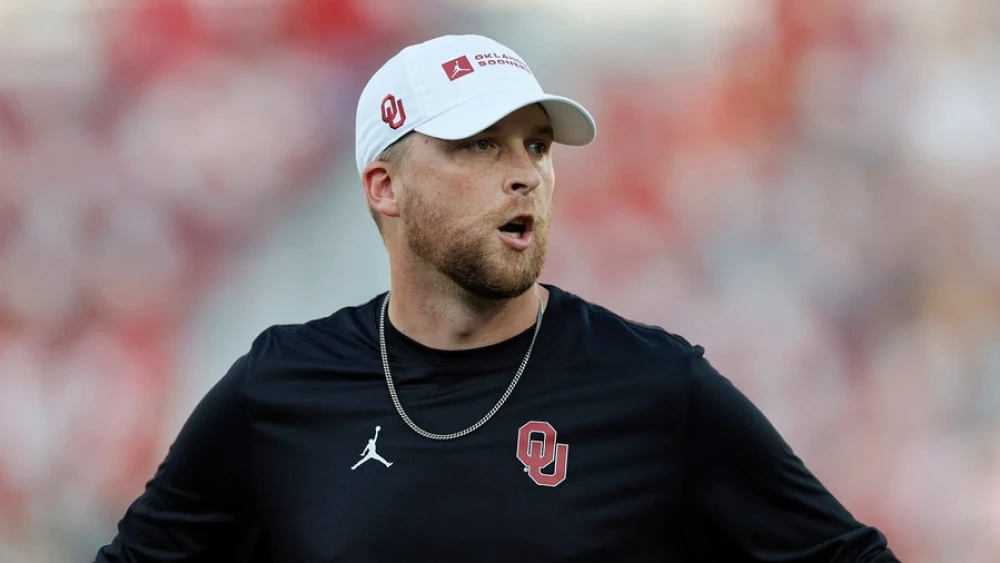
Oklahoma needs to fire Ben Arbuckle today.
Not after another week of practice. Not after another explanation about execution. Not after Brent Venables watches the tape and discovers what everyone watching Saturday already understood.
Today.
And John Mateer needs to stop being the Sooners’ automatic answer at quarterback.
If Venables refuses to make those decisions, Oklahoma’s leadership needs to confront a much more expensive one at season’s end. His newly signed extension makes firing him painful. It should not make continued failure acceptable.
The Sooners lost 42-25 to South Carolina on Saturday in Norman. Through three quarters, their offense had produced 118 yards and three points.
Against South Carolina.
At home.
Again.
The halftime accounting was scarcely believable: 71 yards of offense, 54 yards in penalties and one field goal. Kip Lewis’ interception return for a touchdown supplied the other seven points on Oklahoma’s side of the scoreboard.
The defense had to score just to make an 18-point halftime deficit possible.
“I’m incredibly pissed at myself,” Venables said afterward. “And for all of us, it’s just embarrassing. It’s embarrassing in every way.”
It’s been fucking embarrassing, Brent. Now it’s time to put an end to the shit show — again.
Acknowledging the embarrassment is no longer enough. The question is what Oklahoma’s head coach intends to do about it.
Because anger without action is becoming as predictable as the offense.
There was a halftime in Athens when Venables could have changed quarterbacks after Mateer turned the ball over on three consecutive first-half possessions. There was another halftime Saturday, with South Carolina leading 28-10 and Oklahoma’s offense providing almost nothing.
Both offered an opportunity to interrupt a collapse.
Neither produced a change.
The staff has discussed it. Considered it. Thought about it.
Wonderful.
At some point, the responsibility of a head coach is to make the decision, not describe the conversation.
Oklahoma entered the fourth quarter down 35-10. Mateer was still playing. Arbuckle was still directing an offense that had spent 45 minutes demonstrating how little reason there was to expect a different result.
The late scoring does not erase that. Fifteen fourth-quarter points made the final score more respectable. They did not make the competitive portion of the afternoon acceptable.
Nor does calling for a quarterback change require pretending the backup is guaranteed to save the season.
He isn’t.
But what, exactly, was Oklahoma protecting by refusing to find out whether someone else could give the offense a pulse?
If the answer is that nobody behind Mateer is prepared to play, that is another indictment of the people responsible for preparing them.
If the answer is that Mateer still gives Oklahoma its best chance, the staff owes everyone something more persuasive than the same assertion followed by the same results.
There is a useful comparison in Bloomington.
Defending national champion Indiana beat Minnesota 23-16 in overtime Saturday to improve to 8-1. Curt Cignetti turned to Grant Wilson for the second half after Josh Hoover struggled and took a hit late in the first half. Wilson eventually delivered the winning 25-yard touchdown pass on the first play of overtime.
Hoover’s injury matters. This was not a clean, identical test of two coaches’ willingness to bench a healthy starter, and it should not be presented as one.
But Indiana had another quarterback ready to enter a difficult game and help win it.
Oklahoma apparently cannot find a circumstance bad enough to give someone else a meaningful opportunity.
That is the contrast worth discussing.
A functioning program needs an answer when its first answer stops working. The Sooners keep treating their first answer as the only permissible one.
Mateer’s season totals — 13 touchdown passes, seven interceptions and two lost fumbles — hardly justify that level of protection. Nine turnovers through eight games are not the entirety of Oklahoma’s offensive problem, but neither are they incidental to it.
This is not a referendum on his character or his effort. It is an evaluation of his performance and the coaches’ response to it.
Players can care deeply and still need to sit. Coaches can work hard and still fail.
Arbuckle was hired to fix Oklahoma’s offense. In his second season, Oklahoma is 4-4 and still asking its defense to carry an unreasonable share of the burden.
Saturday, that defense failed, too.
There is no excusing 42 points or the explosive plays South Carolina produced. Venables owns that performance just as surely as he owns the offense. Firing his coordinator cannot become a convenient way to pretend the head coach did his job.
But the defensive collapse also exposed the arrangement Oklahoma has been trying to survive: When the defense cannot rescue the offense, there is no dependable alternative.
That is not a sustainable way to compete in the SEC.
And one better afternoon against Mississippi State never established that the problem was fixed. Improvement has to survive the following Saturday. Otherwise, it is an exception being sold as a turnaround.
This is Year 5 for Venables. Oklahoma finished the regular season 6-6 in two of his first four years. Now, with four games remaining, the Sooners are back at .500 and facing the possibility of another November spent negotiating with bowl eligibility.
That is the record his extension cannot erase.
According to contract details obtained by the OU Daily, firing Venables on Dec. 1 would obligate Oklahoma to pay $51.67 million over five years. That is an enormous obstacle, and anyone suggesting otherwise is ignoring reality.
But an obstacle is not immunity.
The university’s willingness to make that commitment does not require it to pretend the commitment is working. And Venables cannot reasonably interpret the cost of firing him as permission to avoid firing someone else.
Oklahoma is not tied to Arbuckle by that same $51.67 million obligation. Whatever has already been invested in Mateer cannot be recovered by leaving him on the field. The remaining games have to be coached according to what gives Oklahoma a chance now.
Not what makes the original decisions look better.
Firing Arbuckle would not absolve Venables. He hired him. He entrusted him with this offense. He has allowed the same problems to persist.
A midseason change also offers no guarantee of a winning November. An interim play-caller cannot install an entirely new offense overnight, and a different quarterback will inherit many of the same problems.
But keeping everything in place is a decision, too.
It tells the team that this level of production still does not demand a meaningful response from the people in charge.
It tells the fan base that another public declaration of embarrassment is supposed to buy another week.
And it tells Oklahoma’s leadership that Venables either cannot recognize when his solution has failed or cannot bring himself to act on it.
Neither is a persuasive argument for a sixth season.
Venables can fire Arbuckle today, change quarterbacks and begin the difficult work of showing that accountability reaches his own decisions.
Or he can keep defending the arrangement until Oklahoma has to decide whether the arrangement includes him.
The extension makes that decision expensive.
It does not make him right.
Watch: Fire Arbuckle. Bench Mateer. Oklahoma Can’t Wait.
More from Jason Watkins →