Oklahoma Sooners 2026 SEC predictions have become one of the more interesting debates entering the season. Oklahoma has legitimate questions, but so does every program ranked ahead of the Sooners in the preseason SEC Media Poll. That includes a Texas team that showed last season how quickly overwhelming preseason hype can fall apart.
The SEC media wants us to believe two things about the 2026 Oklahoma Sooners.
First, Oklahoma possesses one of the conference’s deepest collections of proven talent.
Second, six SEC programs should be considered more likely to win the league.
Those conclusions are not entirely incompatible. Preseason rankings are meant to evaluate complete teams, not reward programs for accumulating recognizable names on an all-conference ballot.
But in Oklahoma’s case, the gap between the two evaluations is wide enough to demand an explanation.
Ten Sooners were selected to the 2026 Preseason Media Days All-SEC teams.
Kicker Tate Sandell and long snapper Ben Anderson earned first-team recognition, with Sandell selected at both placekicker and kickoff specialist. Eight more Oklahoma players occupied nine second-team positions: linebacker Kip Lewis, punter Grayson Miller, wide receiver and return specialist Isaiah Sategna III, defensive backs Peyton Bowen and Eli Bowen, defensive linemen Taylor Wein and David Stone, and offensive tackle Michael Fasusi.
That is not one courtesy selection surrounded by a few reputation votes.
That is representation across the roster.
Oklahoma has recognized talent along the offensive line, at wide receiver, throughout the defensive front, in the secondary and at every meaningful special-teams position.
Yet the Sooners were picked seventh in the SEC preseason media poll, behind Georgia, Texas, Ole Miss, Texas A&M, LSU and Alabama.
Oklahoma received 1,914 points and two votes to win the conference championship. Alabama finished only 16 points ahead of the Sooners. LSU was 47 points ahead. Texas A&M was 53 points ahead, while Ole Miss was 90 points ahead.
That is not an enormous separation between Oklahoma and the four programs immediately ahead of it.
It is a collection of assumptions.
And those assumptions reveal something important about how preseason voters evaluate Oklahoma compared with the conference’s more fashionable contenders.
The issue is not that Georgia and Texas are flawless while everyone below them is fighting for third place.
They are not flawless.
Georgia at No. 1 is understandable because Kirby Smart has earned considerable institutional credibility through recruiting, player development, championships and nearly annual contention.
That does not make the Bulldogs invulnerable.
Georgia has personnel to replace, offensive questions to answer and the same brutal nine-game SEC schedule awaiting everyone else. Smart has earned more benefit of the doubt than most coaches, but benefit of the doubt should not be confused with proof.
Texas at No. 2 deserves considerably more scrutiny.
The Longhorns entered the 2025 season as the consensus No. 1 team in America. Arch Manning began the year as the Heisman Trophy betting favorite. Texas was widely portrayed as college football’s most talented and complete roster.
Then the games began.
Texas finished the regular season 9–3 and missed the College Football Playoff, landing 13th in the final selection rankings. Manning ultimately produced respectable season totals, but his early inconsistency helped derail the expectations attached to both him and his team.
The Longhorns lost 29–21 to a Florida team that eventually finished 4–8. The Gators were still coached by Billy Napier that afternoon, but his dismissal later in the season only makes the result look worse in retrospect.
Texas then needed overtime to escape Kentucky 16–13.
The Longhorns generated only 179 yards of total offense and were outgained 395–179 by a Kentucky team that entered the game winless in conference play. Texas survived because its defense stopped four consecutive rushing attempts from inside the 3-yard line during overtime.
One week later, Texas needed another overtime period to beat Mississippi State 45–38 after trailing 31–14. The Longhorns required a 24-point fourth quarter to avoid what would have been another damaging defeat against one of the SEC’s lower-tier teams.
Texas deserves credit for winning those games.
Survival matters.
But those performances also matter when voters turn around eight months later and treat the Longhorns as though last year merely represented a brief inconvenience on the inevitable march toward greatness.
Texas was not some plucky young team that exceeded expectations during a nine-win season.
It was the preseason No. 1 team in America.
Its quarterback was the Heisman favorite.
Its roster was marketed as one without meaningful weaknesses.
The Longhorns still lost three regular-season games and missed the playoff entirely.
Now we are being asked to believe the remaining questions surrounding Texas are merely part of its considerable upside, while Oklahoma’s questions are apparently severe enough to place the Sooners five positions lower.
That distinction is not based solely on what happened last season.
It is based on comfort.
Voters remain comfortable projecting Texas as a championship team because of its recruiting rankings, resources, NFL prospects and national brand. When Texas struggles, the assumption is that all that talent will eventually correct the problem.
Oklahoma is not being granted the same presumption.
That is particularly notable when considering the Red River Rivalry.
Texas defeated Oklahoma 23–6, and that result belongs in any honest comparison of the teams. The Longhorns were better that day.
But context also matters.
Oklahoma quarterback John Mateer returned only weeks after suffering a broken thumb on his throwing hand and undergoing surgery. He completed 20 of 38 passes for 202 yards and threw three interceptions in his first game since the injury.
Those turnovers were decisive.
Texas intercepted Mateer three times, repeatedly preventing an excellent Oklahoma defense from receiving the complementary support it needed.
Brent Venables chose to start his injured quarterback in the biggest rivalry game on the schedule. That decision remains open to criticism.
Michael Hawkins Jr. was healthy, experienced and talented enough to give Oklahoma a different option. We cannot state with certainty that the Sooners would have beaten Texas with Hawkins behind center. Counterfactuals are easy because the imaginary quarterback never throws an interception.
But it is entirely reasonable to believe Oklahoma would have had a far better opportunity to win with a healthy Hawkins than it had with a clearly compromised Mateer committing three costly turnovers.
That was a coaching decision—not proof that Texas possessed an unquestionably superior team.
Oklahoma’s loss counts.
So does the manner in which it occurred.
If Texas receives the benefit of context for its struggles against Florida, Kentucky and Mississippi State, Oklahoma should receive context for playing its most important rivalry game with a quarterback rushed back from hand surgery.
This does not mean Oklahoma should automatically be ranked ahead of Texas.
It means Texas has not earned the right to be discussed as though its questions are hypothetical while Oklahoma’s questions are fatal.
The same standard should be applied throughout the poll.
Ole Miss is entering a new era under Pete Golding after Lane Kiffin left for LSU. The Rebels may remain a national contender, but ranking them third requires faith that a first-year head coach can preserve the culture, offensive identity, roster management and weekly consistency established by his predecessor.
Texas A&M has talent, resources and momentum under Mike Elko. It also has an empty championship trophy case that Elko himself uses as a motivational tool.
That is funny, self-aware and revealing.
The Aggies might be ready to break through, but “might be ready” sounds remarkably similar to the argument voters refuse to make for Oklahoma.
LSU hired one of the sport’s best offensive coaches in Kiffin, and nobody should underestimate what he might build with Baton Rouge talent, institutional resources and access to the transfer portal.
Still, LSU has a new head coach, new systems, significant roster turnover and immediate championship pressure.
Those are not small questions.
Alabama will always possess enough talent to win the SEC, and dismissing the Crimson Tide is usually a reliable way to look foolish by November.
Still, Oklahoma has beaten Alabama in two of their past three meetings.
The Sooners overwhelmed the Crimson Tide 24–3 in Norman in 2024, then traveled to Tuscaloosa and earned a 23–21 regular-season victory in 2025.
Alabama answered in the College Football Playoff, rallying from a 17-point deficit to defeat Oklahoma 34–24 in Norman.
That postseason loss matters.
Oklahoma had an opportunity to eliminate Alabama and failed to finish the job. The Sooners’ offensive limitations resurfaced, Alabama adjusted and Oklahoma allowed a commanding early advantage to disappear.
But the full three-game sample matters too.
Oklahoma demonstrated twice that its defense, physicality and overall roster were capable of beating Alabama. The Crimson Tide proved in the playoff rematch that Oklahoma’s offensive inconsistency could still prevent the Sooners from becoming a complete championship team.
That does not automatically make Oklahoma better than Alabama entering 2026.
It does make Alabama’s position ahead of Oklahoma far less obvious than the helmets might suggest.
The SEC media clearly believes Oklahoma has players. The All-SEC ballot proves it.
What voters still do not completely believe in is the operation.
They do not fully trust Venables to produce a complete team. They do not fully trust the Oklahoma offense. They do not fully trust the Sooners to combine defensive talent, elite special teams and emerging offensive pieces into a championship-caliber product.
That skepticism did not appear from nowhere.
Venables earned criticism during Oklahoma’s disappointing 2024 season, when the offense became a weekly obstacle and the Sooners struggled throughout portions of their first SEC campaign.
Even after a far stronger 2025 season and a College Football Playoff appearance, Oklahoma’s reputation may not have recovered as quickly as its football team did.
Reputations are stubborn in college football.
Once a coach is labeled defensive-minded but offensively limited, every offensive question becomes confirmation.
Once a program is described as unprepared for the SEC, every difficult schedule becomes evidence.
Meanwhile, the conference’s more fashionable programs are allowed to carry similar uncertainty without receiving the same penalty.
Texas failed to meet historic preseason expectations and missed the playoff? That becomes a growth experience.
LSU has a new coach and reconstructed roster? That becomes excitement.
Ole Miss must replace the most successful coach of its modern era? That becomes continuity.
Texas A&M has yet to prove it can finish a championship run? That becomes potential.
Georgia has offensive questions and personnel to replace? Kirby Smart will figure it out.
Oklahoma has questions on offense?
Apparently, that becomes seventh place.
The Sooners should not be ranked first simply because they placed 10 players on the preseason All-SEC teams. Sandell and Anderson were Oklahoma’s only first-team selections, and both are specialists. No Oklahoma offensive or defensive player was selected to the first team.
That distinction matters.
The ballot suggests Oklahoma possesses excellent depth and a long list of very good players. It does not necessarily prove the Sooners own the conference’s largest collection of elite difference-makers at premium positions.
There is also a legitimate question surrounding quarterback play and whether Oklahoma can generate enough offense to survive a demanding schedule.
Can the Sooners protect their quarterback consistently?
Can they create explosive plays without depending upon defensive takeaways or favorable field position?
Can they finish games against elite opponents when the margin for error disappears?
The playoff loss to Alabama demonstrated exactly why those questions remain attached to Oklahoma.
The Sooners were good enough to build a 17-point lead against one of the sport’s premier programs. They were not complete enough to protect it.
But the top of the SEC poll is not occupied by flawless teams followed by Oklahoma.
It is occupied by programs carrying different versions of uncertainty.
Texas is counting on Manning to convert immense promise into consistent, week-to-week dominance after last season’s disappointment.
LSU is counting on Kiffin to construct a contender immediately.
Ole Miss is counting on Golding to maintain one.
Texas A&M is counting on potential finally becoming production.
Alabama is counting on talent and tradition to outweigh the fact that Oklahoma has defeated the Crimson Tide in two of their past three meetings—even though Alabama won the matchup that mattered most.
Georgia is counting on Smart’s machine continuing to produce answers before its questions become costly.
The voters are permitted to make those bets.
They should simply admit that they are bets.
Oklahoma’s seventh-place ranking says less about the talent on Venables’ roster than it does about the confidence he has yet to regain fully from the wider college football public.
The media believes Oklahoma is good.
It believes Oklahoma is deep.
Two voters even believe Oklahoma can win the conference.
But as a group, the media remains more willing to imagine that the programs ahead of the Sooners will answer their questions correctly.
That is the inconsistency hidden inside this poll.
Venables does not have to manufacture disrespect for his locker room. He does not have to print an anonymous social-media post or replay a television argument.
The SEC media documented its doubts for him.
Now Oklahoma must determine what seventh place ultimately represents.
Was it a reasonable warning that the Sooners still lack the offensive certainty required to win the country’s deepest conference?
Or was it another example of voters trusting familiar logos, recruiting rankings, new-coach excitement and theoretical upside more than the evidence Oklahoma placed on the field?
Preseason rankings do not win games, and preseason All-SEC selections do not guarantee championships.
They do expose expectations.
The SEC expects Oklahoma to be talented enough to challenge nearly everyone on its schedule—but not complete enough to finish ahead of six other programs.
That is a specific judgment.
It should also be a useful one.
Because Oklahoma is not the only team in the SEC with questions.
It might simply be the team whose questions the media is least willing to forgive.
__________
Jason Watkins is the founder of HOF Media Group and the HOF College Football YouTube Channel, which covers Oklahoma Football, The SEC and Major college football throughout the country. Write to him at jw@hofmedia.us
The SEC transition has been harsher on Brent Venables and the Oklahoma Sooners than anticipated, with a tough 1-4 start sparking fan concerns over Venables’ leadership.
Despite glimpses of offensive progress in their latest 26-14 loss at Ole Miss, Oklahoma’s 4-4 record has fueled doubts about Venables’ ability to steer the program through the SEC’s relentless competition. While injuries to key offensive players have created challenges, Venables’ hesitance to address coaching issues and poor communication within the offensive staff have only deepened the Sooners' struggles.
The failure of the offensive staff to communicate effectively and Venables’ hesitance to manage his coaching staff proactively have compounded the difficulties presented by mounting injuries.
Hesitancy on Display: The 4th-Down Decision
Venables' hesitation was encapsulated on Saturday, just six days after finally relieving Littrell of his duties as offensive coordinator: the 4th-and-4 timeout against Ole Miss late in the third quarter. Trailing by two scores, Oklahoma needed a jolt to stay in the game.
The situation was critical, but hardly complex. Coaches make these calls instinctively, often without a second thought. Instead, Venables used a timeout — only to ultimately bring out the punt team, a decision that deflated the offense and left fans scratching their heads.
If the choice was to punt, Venables could’ve delayed the game for a mere five yards instead of burning a precious timeout. If he intended to go for it, why not get his new play caller’s best play for the situation and make the call confidently?
Even if the Sooners fail to pick up the four yards, it would have signaled a willingness to take a chance — or give one — to an offense that has been less-than-inspiring all season.
In that one instance, Venables’ hesitation was as costly as a missed play. With the momentum squarely in favor of Lane Kiffin’s Rebels, burning that timeout only to punt sent the wrong signal to a young group on offense that is in serious need of someone who believes in them. Instead, he proved he didn’t trust them to get a measly four yards and extend a drive to get back into the game.
OU’s Identity Crisis on Offense
What we’re witnessing with OU’s offense is not merely a slump — it’s an identity crisis. Oklahoma fans are accustomed to high-powered, fast-paced offenses that can score almost at will. Littrell’s offense was anything but explosive for seven weeks, and Joe Jon Finley had a lackluster, scoreless latter half of Week 8, too.
To say the Sooners struggled to establish consistency would be an overwhelming understatement.
OU has struggled with untimely penalties and turnovers and suffered through a complete lack of innovation and creativity. The plays feel uninspired, lack direction and are devoid of explosive results.
As a unit, this offense is drawing comparisons to the infamous John Blake era, and has the numbers to back the comparison up. ⬇️ ⬇️ ⬇️ ⬇️
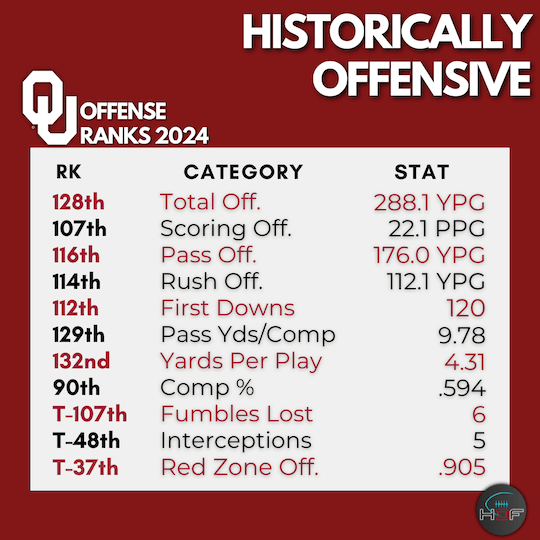
There’s no other way to say it but bluntly … OU has no clear identity with its offense on the field.
The offensive woes go beyond play-calling; they’re structural. Reports from inside the Switzer Center suggest that there have been significant communication breakdowns within the offensive staff. Coaches have reportedly been on different pages regarding even the most fundamental elements, like blocking schemes. If those rumors are reaching the public, it’s safe to say Venables has known about these issues for some time.
A head coach — even a defensive-minded one like Venables — cannot allow such dysfunction to persist. These aren’t minor misunderstandings; they’re symptoms of a team struggling to find cohesion. Venables needed to address these issues early, before they became embedded in the team’s culture, but his delay in doing so has turned what might have been small fires into an inferno.
Mailed-In Hire: The Problem with Littrell
When Venables hired Seth Littrell, it felt like a placeholder decision. It wasn’t the bold, visionary hire that programs like Oklahoma should be making. Littrell’s track record showed some promise, but he had yet to prove himself as the kind of offensive mind that could elevate a program to championship contention.
Looking back on the decision to elevate Littrell and Finley, the hire seems more like an afterthought, a half-measure rather than a commitment to offensive excellence.
The results have been glaringly obvious. The offense lacks explosive creativity that OU fans are used to seeing, and that lack of energy has translated into downright unacceptable performances on the field, as evidenced by the Sooners’ historically bad statistical rankings in FBS football.
In just ten months on the job, Littrell and his offensive staff failed to the tune of numbers nobody in their right minds would have predicted following the Sooners’ 2023 season that saw the offense rank in the Top 5 in both Total Offense and Scoring Offense, and alone at the top of the Big 12 Conference in Points, Yards and Yards Per Play.
This despite having two of the most electric quarterbacks from their respective recruiting classes in the fold:
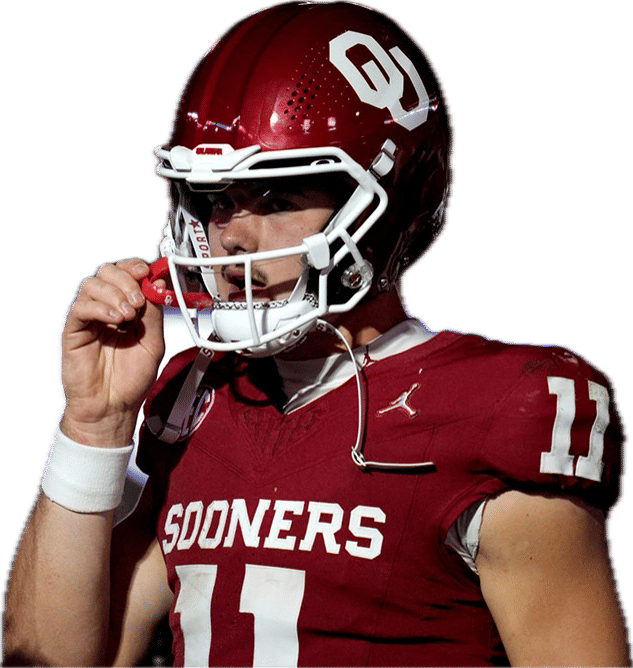
2023 5-star and Elite 11-winning Jackson Arnold of Denton Guyer, the 2023 Gatorade National HS Player of the Year and twice a Class 6A State Finalist in Texas.
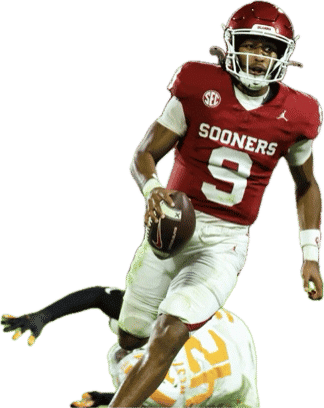
And former Allen and Frisco Emerson (Texas) superstar Michael Hawkins, Jr., a Sooner legacy trained by Kyler's father Kevin Murray, and who, as a senior, accounted for 55 touchdowns and just three turnovers, leading Emerson to within a game of playing for a Texas State Championship in Class 5A.
Neither were able to sustain success under Littrell's tutelage, and rumors have swirled this week about none of OU's QBs feeling as though been properly developed by the now-fired Littrell as the QBs coach.
Both started a games after being inserted for the other following ineffective play, and both came into their first appearances under Littrell with confidence and swagger that appeared missing by the time they were pulled from games after committing three turnovers and allowing the Sooners to fall behind teams they likely could have beaten were it not for the turnovers they committed.
In other words, Seth Littrell had to go.
Saturday’s loss leaves Oklahoma at 4-4, staring down a potential losing season -- the second for Venables since he arrived after the abrupt departure of Lincoln Riley to USC.
These are unacceptable at Oklahoma, a school with one of the richest football traditions in the country. What makes it even more alarming is that no longer can OU fans blame the losses on a ineffectice, suoddr defense — OU seems to have mostly turned the corner on that side of the ball — but to say the fan base is frustrated, would again be a massive understatement.
Oklahoma fans don’t want excuses; they want results. And for a head coach like Venables, the time for excuses is running out.
The Next OC Hire: BV’s Defining Moment
After Finally punting the Littrell experiment — once again needing more time than most believe he should have — Venables again finds himself in the market for a new offensive coordinator — for the third time in three seasons.
This time, though, the choice Venables makes will ultimately define his second tenure in Norman, possibly his entire future as a head coach in college football. Mailing it in would be tantamount to a dereliction of duty in the eyes of Sooner Nation.
Venables MUST get this one right. He has to bring in someone with a proven track record of offensive success, someone who can bring energy, innovation, and a clear identity to the offense. Anything less than a home-run hire will only deepen the cracks in Venables’ foundation as head coach.
If Venables fails to find the right offensive coordinator, his job security will slip through those cracks, and his tenure as the Head Ball Coach of the Sooners will die in a whimper. Even if he builds a defense that resembles the ’85 Bears, it won’t matter if OU’s offense can’t score points.
The OU fan base is patient to a degree, but they expect excellence. For Venables, this is a make-or-break moment.
Either he finds the right offensive coordinator and proves he can lead a balanced, championship-caliber team, or he risks being shown the door in a year or less.
The Venables Paradox: Championship Defense, JV Offense
The irony of Venables’ situation is that, in many ways, Oklahoma has become Lincoln Riley’s reverse image. Under Riley, the Sooners fielded prolific offenses but were plagued by a porous defense that could never quite get them over the championship hump.
With Venables, it’s the opposite: the defense has shown promise, but the offense is currently in full-on spiral.
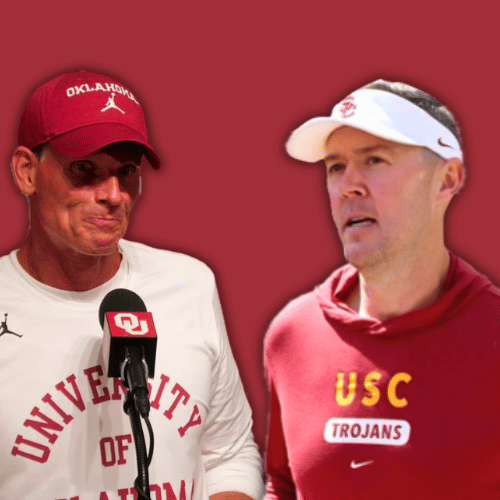
The head coach role, especially at Blue Blood OU, requires more than defensive expertise or recruiting prowess. It demands a complete vision, a well-rounded team, and an unwavering commitment to excellence on both sides of the ball.
For Venables to truly establish himself as a championship-level head coach, he has to be willing to delegate offense to someone who can make people forget he’s a defensive guru and simply call him “Coach.” To reach the heights that Oklahoma fans demand, Venables needs to be remembered not as a defensive mind but as a leader who fields a complete team. That requires taking risks, making tough decisions, and, most importantly, holding his staff to the highest possible standard.
It requires a decisive, confident vision for a championship future. The clock is ticking on Brent Venables’ tenure in Oklahoma, and his window for turning things around is narrowing.
Being the head coach at Oklahoma is an honor, but it’s also a responsibility. Venables needs to rise to that responsibility, or he and Lincoln Riley might both be in the job market this time next year.
________________
Jason Watkins is the Publisher at HOF Media Group and the Host of the HOF College Football Podcast. Reach him at jw@hofmedia.us